
Visual Resources & Posters
This section includes visual resources and posters developed by SoundCheck Aotearoa, along with links to relevant materials created by other organisations.
The resources fall into two categories:
Informational posters
Visual resources for use at live music events
Informational Posters
Informational posters can be used across a range of settings, including offices, music venues, and health and safety noticeboards.
They can also support a Sexual Harassment Policy by providing clear guidance on what sexual harassment is and outlining examples of bystander intervention.
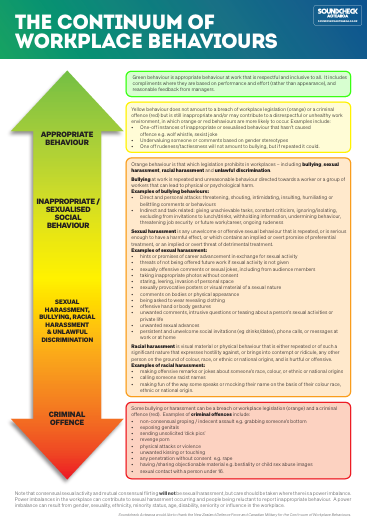
Continuum of Workplace Behaviours
(Bullying and Harassment)
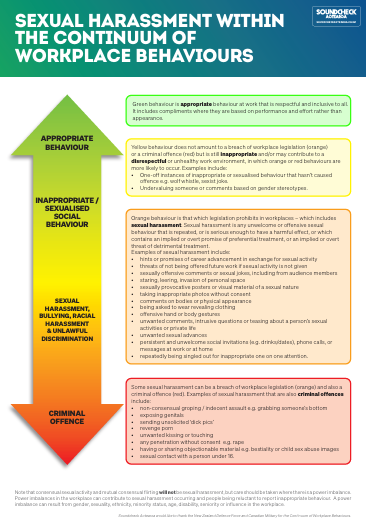
Continuum of Workplace Behaviours
(Sexual Harassment)
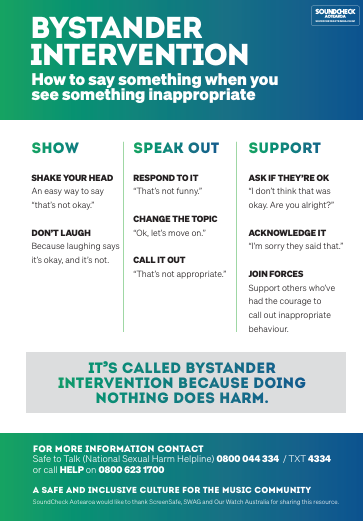
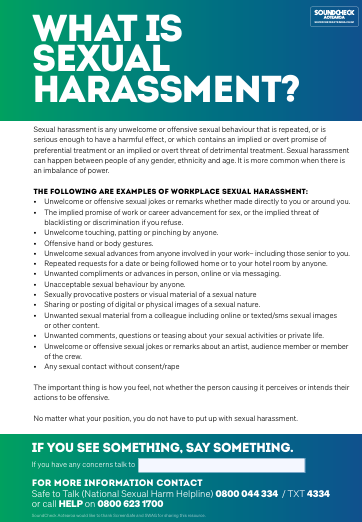
Visual Resources for Live Events
These resources are designed for use at live music events and include materials for both event staff and audiences.
Posters for public and audience areas:
These posters are intended for display in public-facing spaces to support positive culture and behaviour, and to provide clear information on how to report concerns.
Consent culture posters:
This set of posters communicates key messages about the importance of consent.
Consent Culture Posters
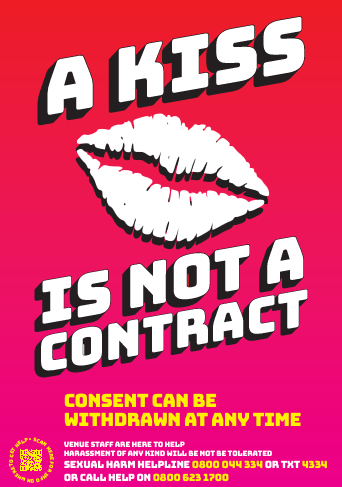


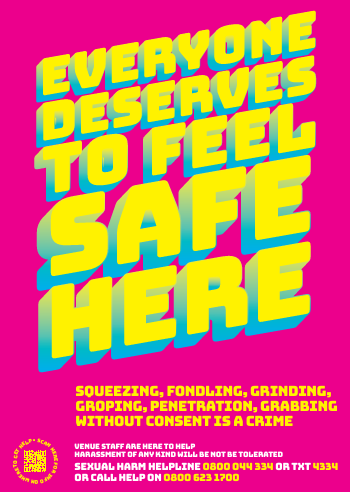
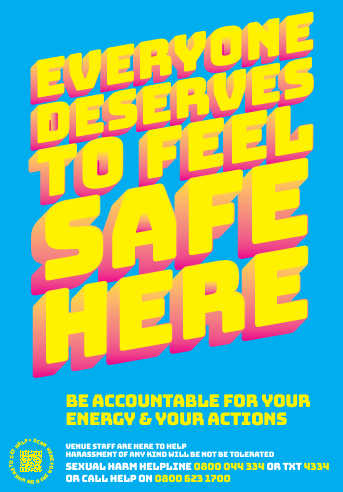
Party Rules Posters
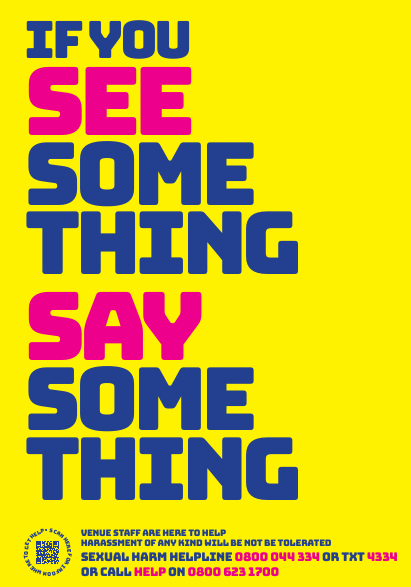
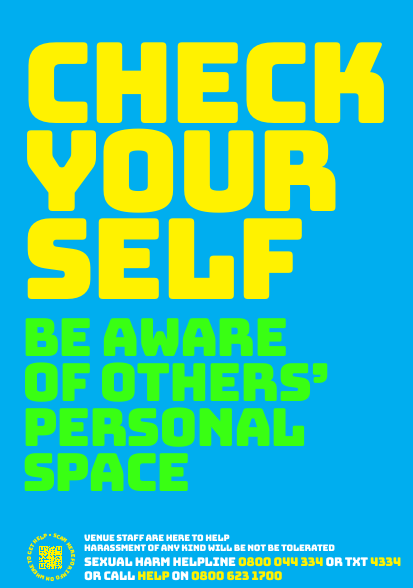
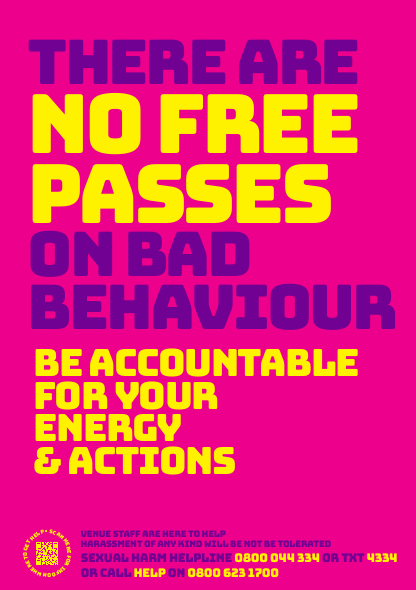
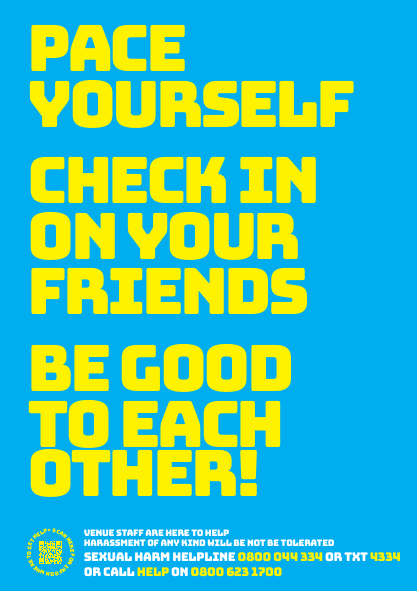
Bystander Intervention 6Ds Poster
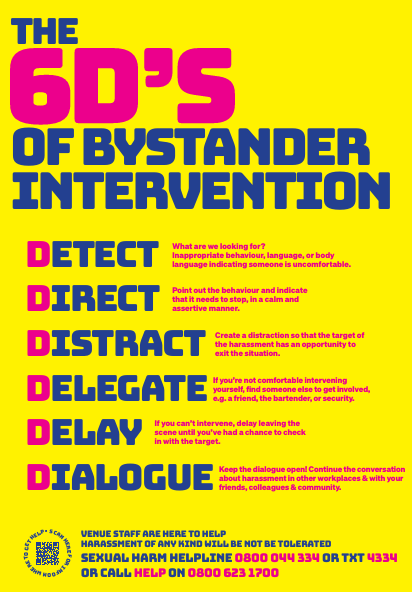
Quick reference resources for live music events
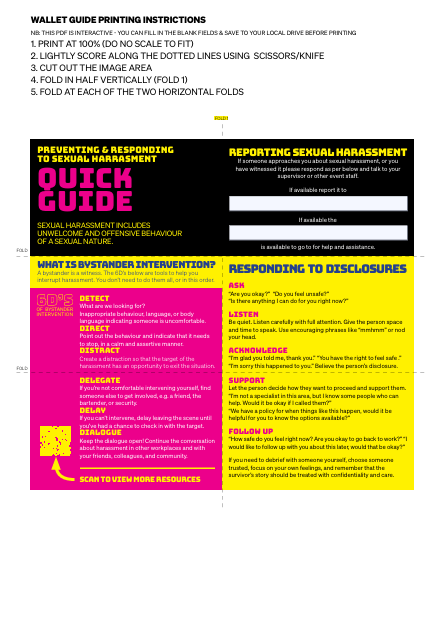
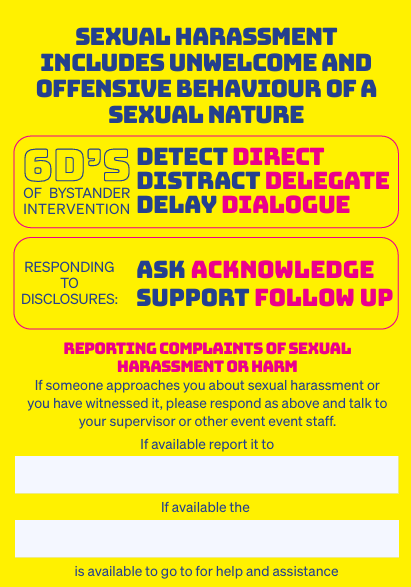
These resources for workers at live music events provide quick reference and visual guidance to help identify and manage risks of sexual harassment. They are designed to complement existing event policies and processes.
-
Before an event, workers should be briefed on how to use the laminated guidance materials. This briefing should be shared with all relevant stakeholders, including venue staff, security, promoters, and performers. The laminate is intended as a quick reference to reinforce existing training, briefings, and reporting processes.
Reporting lines should be clearly established prior to the event, taking into account the event size and available staff:
Backstage – large events: At least one designated contact should be visible and known across departments (e.g. Health and Safety representative, promoter representative, or Merlin’s Pass holder). Other appropriate staff may include the Stage Manager or Artist Liaison.
Backstage – small events: Reporting may sit with roles such as the bar manager, promoter, or tour manager.
Public-facing – large events: Security staff should report to a supervisor, who will escalate to trained delegates.
Public-facing – small events: Reporting may be managed by roles such as the bar manager, promoter, tour manager, or merchandise staff.
-
Before an event, workers should be briefed on how to use the wallet cards and the information they contain. This should be shared with all relevant stakeholders, including venue staff, security, promoters, and performers.
Reporting lines must be clearly established prior to the event, based on event size and available staff:
Backstage – large events: At least one designated contact should be visible and known across all departments (e.g. Health and Safety representative, promoter representative, or Merlin’s Pass holder). Additional contacts may include the Stage Manager or Artist Liaison.
Backstage – small events: Reporting may be managed by roles such as the bar manager, promoter, or tour manager.
Public-facing – large events: Security staff should report to a supervisor, who will escalate to trained delegates.
Public-facing – small events: Reporting may be managed by roles such as the bar manager, promoter, tour manager, or merchandise staff.
Supporting guidance for use of resources
For additional inspiration, the following examples of visual resources and posters have been developed by other organisations. Some examples are from international jurisdictions and are included for guidance; applicable laws may differ.
Beacon Festival - Be Nice
Rhythm & Vines - Good Vibes
Your Choice - House Rules